

Distillate is a stripped down, near pure cannabinoid concentrate built for potency and predictability. Full spectrum keeps the plant’s original terpenes, minor cannabinoids, and flavonoids intact for a rounder, more complex effect. Pick distillate when you want consistent, measurable potency in a vape or edible; pick full spectrum when you want the whole plant’s character and accept more batch-to-batch variation. Either way, check the COA before you buy, and start low if you’re new to high potency products.
TL;DR:
- Purity and safety checks are crucial, as high THC percentages do not indicate product quality or absence of contaminants.
- Full spectrum products vary significantly between batches, relying on strain and harvest, unlike the consistent potency of distillate.
- Distillate is highly potent, flavorless, and cheaper to produce, but requires careful dosing due to its purity and concentration.
- Both product types can trigger positive drug tests, so avoid them if you are subject to regular cannabis screening.
- Verifying lab results, cannabinoid percentages, and terpene profiles is essential to ensure product authenticity and suitability for your goals.
Table of Contents
- Distillate vs Full Spectrum: A Quick Side-By-Side Look
- What Is Distillate and How Is It Made?
- What Full Spectrum Extracts Are and How They Differ
- How Distillate and Full Spectrum Compare on Effects, Dosing, and Safety
- How to Choose Between Distillate and Full Spectrum
- How Bulk Cheap Weed and Supherbs Approach These Products
- What Actually Matters When You’re Comparing These Two
- Where to Find Lab-Tested Distillate and Full Spectrum Products
- Sources
Distillate vs Full Spectrum: A Quick Side-By-Side Look
The core difference comes down to what survives processing. Distillate is refined down to almost pure THC or CBD, often described as having very high purity, with everything else stripped away. Full spectrum keeps a broader slice of the plant intact, so potency numbers run lower but the chemical makeup is more complex.
Here’s how the two compare on the things that actually affect your buying decision:
- Composition: Distillate is close to a single isolated cannabinoid; full spectrum retains cannabinoids, terpenes, and flavonoids together.
- Potency and consistency: Distillate delivers a known, repeatable dose every time; full spectrum potency shifts by batch depending on the starting flower or hash.
- Product forms: Distillate dominates vape cartridges, gummies, and dab syringes; full spectrum shows up more in tinctures, rosin, and whole plant concentrates.
- Flavor: Distillate is flavorless on its own, so manufacturers add terpenes back in; full spectrum carries the strain’s natural taste and aroma.
- Price: Distillate is generally cheaper to produce at scale; full spectrum costs more because it needs terpene rich, high quality starting material.
- Drug testing: Both can trigger a positive THC test, and full spectrum’s broader cannabinoid load doesn’t reduce that risk.
None of this makes one option universally “better.” It makes them suited to different goals, which is the whole point of comparing them in the first place.
What Is Distillate and How Is It Made?
Distillate starts as raw cannabis biomass that goes through solvent extraction, usually with butane, propane, or ethanol, to pull out a crude oil. That crude gets winterized, a process that chills the oil and filters out fats, waxes, and chlorophyll. What’s left goes through short path distillation, where heat and vacuum pressure separate cannabinoids by boiling point until you’re left with a nearly clear, viscous liquid that’s almost entirely THC or CBD.
That process is why distillate hits such high, consistent purity levels. It also means low quality or even moldy input material can still yield a clean, high potency final product, since distillation removes contaminants along with everything else. That’s a feature for safety but a trap for judging quality by potency alone. A 95% THC distillate tells you nothing about the flower it came from.
Because distillate strips out terpenes, manufacturers add them back in, either cannabis derived or botanically sourced, to restore flavor and aroma. That’s standard practice, not a red flag by itself. It only becomes a concern when a brand won’t say which terpenes it used or where they came from.
Distillate turns up most often in vape cartridges, gummies and other edibles, dab syringes, and some tinctures. Because it’s so concentrated, dosing errors are easy to make, especially with dabs or homemade edibles where a few extra drops can mean a much stronger dose than intended.
Pro Tip: Never judge distillate quality by THC percentage alone. Ask for the COA and check for pesticide and residual solvent panels, not just potency.
Watch for products with no lab results posted, unusually cheap “90%+ THC” oil, or vague ingredient lists that don’t disclose added terpenes. Those are the clearest signs a distillate isn’t what it claims to be.
What Full Spectrum Extracts Are and How They Differ
Full spectrum extraction aims to preserve as much of the plant’s original chemistry as possible, rather than isolating a single compound. Producers typically use CO2 extraction, ethanol extraction, or solventless methods like rosin pressing, and the quality of the starting flower matters far more here than it does for distillate, since nothing gets stripped away and rebuilt later.
A full spectrum product typically retains:
- THC and CBD in their natural ratio from the source plant
- Minor cannabinoids like CBG, CBN, and CBC
- A full terpene profile specific to the strain
- Flavonoids that may contribute subtle flavor and effect nuances
Because nothing is standardized the way distillate is, full spectrum products vary from batch to batch and brand to brand. Two “full spectrum” tinctures from different companies can feel noticeably different depending on the strain, harvest, and extraction method used.
The theory behind choosing full spectrum is the entourage effect, the idea that cannabinoids and terpenes work together to produce effects that differ from any single compound alone. It’s a reasonable hypothesis with consistent support in preclinical studies and plenty of anecdotal reports, but the clinical evidence in humans remains limited. Treat entourage effect claims as plausible, not proven, and calibrate your expectations accordingly.
Full spectrum shows up most in tinctures, rosin, live resin, and some vape products marketed specifically as whole plant extracts. If you’re weighing a full profile concentrate against a refined one, a live resin versus distillate comparison lays out the tradeoffs in more detail.
How Distillate and Full Spectrum Compare on Effects, Dosing, and Safety
Minor cannabinoids and terpenes don’t just add flavor. They appear to shape how a dose feels, which is part of why two products with identical THC content can hit differently. Cannabinoid pharmacology varies meaningfully between product types, and that variability is a big reason full spectrum users often report needing less product to feel an effect compared with isolated THC.
Here’s a practical approach to dosing either type safely:
- When new to edibles, it is recommended to start with a low THC dose, regardless of whether the product is distillate or full spectrum.
- Wait a full two hours before taking more of an edible; onset is slower and less predictable than smoking or vaping.
- For high potency distillate products, a smaller dose than usual may be needed, since these oils are highly concentrated compared to flower.
- Track how full spectrum products affect you individually, since batch variation means last month’s tincture may not match this month’s.
- Avoid high potency distillate entirely if you have a history of anxiety or panic with THC, since sharper, more concentrated psychoactive effects are a known risk.
Distillate’s purity is exactly what makes it riskier to misjudge. Clinicians note that distillate’s high concentration can produce sharper, more intense psychoactive effects than a comparable dose of full spectrum extract, precisely because there’s nothing tempering the THC.
On drug testing, don’t assume full spectrum is the “safer” choice just because THC content per milliliter looks lower. Full spectrum CBD products can still trigger a positive THC test, since most contain some trace THC by design. If you’re subject to regular screening, a THC free isolate is the only reliable route, not full spectrum and not standard THC distillate.
How to Choose Between Distillate and Full Spectrum
Match the product to the goal, not the marketing. If you want predictable, repeatable potency for a specific dose every time, distillate is the more reliable pick. If you want a broader effect profile and don’t mind some variation between batches, full spectrum is worth the extra cost.
Run through this checklist before you buy either type:
- Check the COA: Confirm actual THC/CBD percentages match the label, not just an advertised number.
- Look for a terpene report: A real terpene breakdown signals a brand that tests thoroughly, not just for potency.
- Verify the lab name and batch ID: A COA without a named lab or batch number isn’t independently verifiable.
- Ask how terpenes were sourced: For distillate specifically, ask whether added terpenes are cannabis derived or botanical.
- Match the format to your routine: Vapes and edibles suit distillate’s consistency; tinctures and rosin suit full spectrum’s fuller profile.
Canadian labeling and testing standards under the Cannabis Act exist specifically so consumers have a baseline to check products against, so use that COA requirement to your advantage rather than trusting a package label alone.
Pro Tip: If a “full spectrum” product has no terpene data on its COA, it’s really just an untested extract with a marketing label. A genuine full spectrum product should be able to show you the terpene profile, not just the total cannabinoid count.
If you’re still unsure which format suits your goals, our terpenes guide breaks down how specific terpenes influence the experience beyond THC content alone.
How Bulk Cheap Weed and Supherbs Approach These Products
Some bulk pricing models exist to make lab tested distillate and full spectrum products accessible without pushing customers toward the cheapest, least transparent option on the shelf. That only works when sourcing and testing hold up to scrutiny.
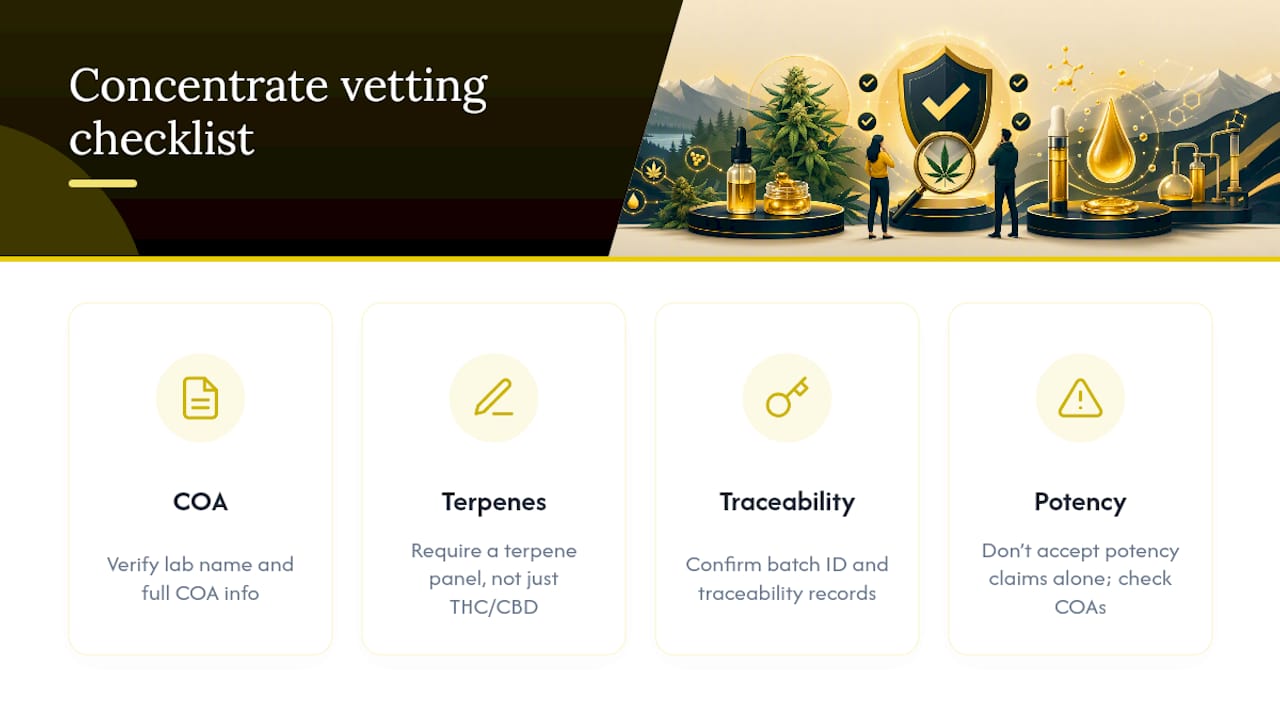
Supherbs’ analysis of concentrates focuses on the same fundamentals covered here: verified COAs, terpene reporting, and batch traceability, rather than potency numbers alone. Any credible vetting checklist for concentrates should confirm lab name, batch ID, cannabinoid percentages, and a terpene panel before potency claims get taken at face value.
What Actually Matters When You’re Comparing These Two
Most of the advice floating around treats this as a simple potency versus flavor tradeoff. That undersells the real decision. The bigger variable is how much you value consistency over complexity, and how disciplined you are about dosing either one.
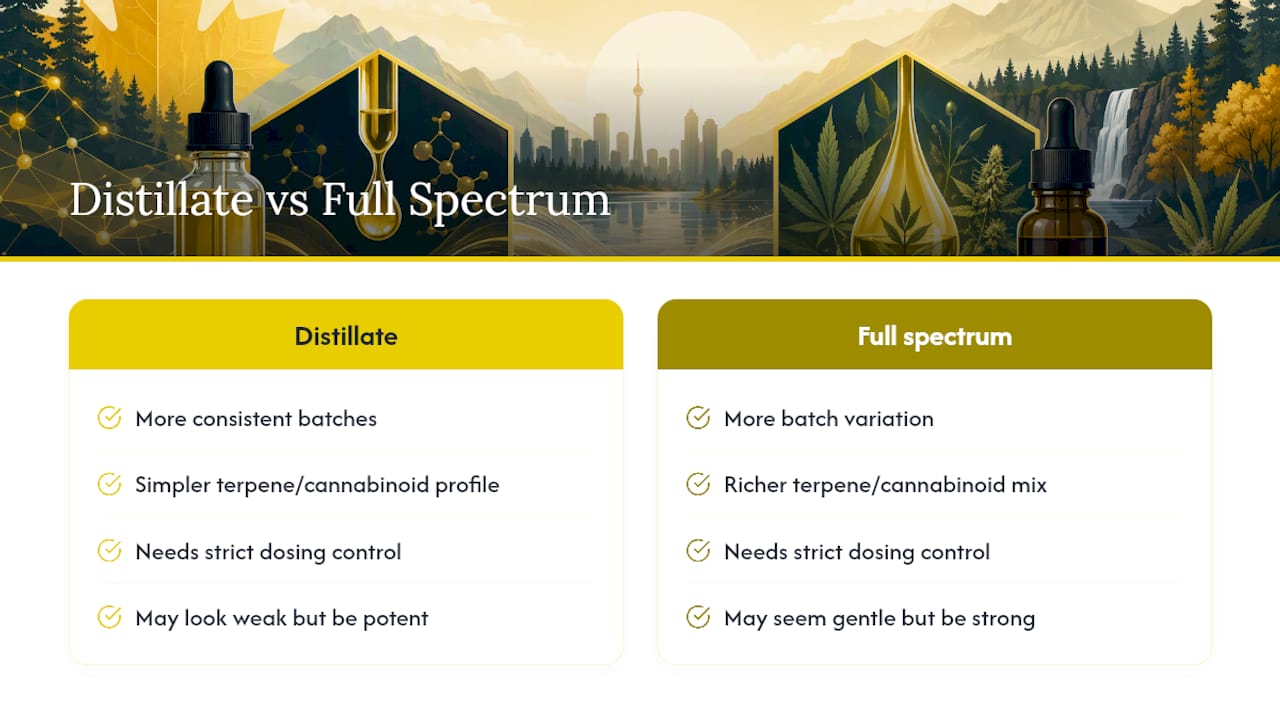
Distillate’s biggest risk isn’t the product itself. It’s the gap between how strong it actually is and how strong people assume it is, because it looks and pours like a light oil rather than a potent concentrate. Full spectrum’s biggest risk is the opposite problem: assuming “natural” or “whole plant” automatically means gentler, when batch variation can just as easily produce a stronger than expected experience.
The entourage effect gets cited constantly as the deciding factor, but the honest answer is that the science isn’t settled enough to build a purchasing decision around it alone. Use it as one consideration among several, not the whole argument. What should come first is the COA. A distillate or full spectrum product without verified lab results tells you nothing reliable about either potency or safety, regardless of what the label promises.
— Supherbs
Where to Find Lab-Tested Distillate and Full Spectrum Products
Bulk Cheap Weed’s bulk pricing model means you’re not stuck choosing between a lab tested product and an affordable one. The shop carries both high purity distillate and true full spectrum extracts at wholesale prices, so switching between formats to find what suits your dosing style doesn’t cost you extra for the privilege of testing it out.
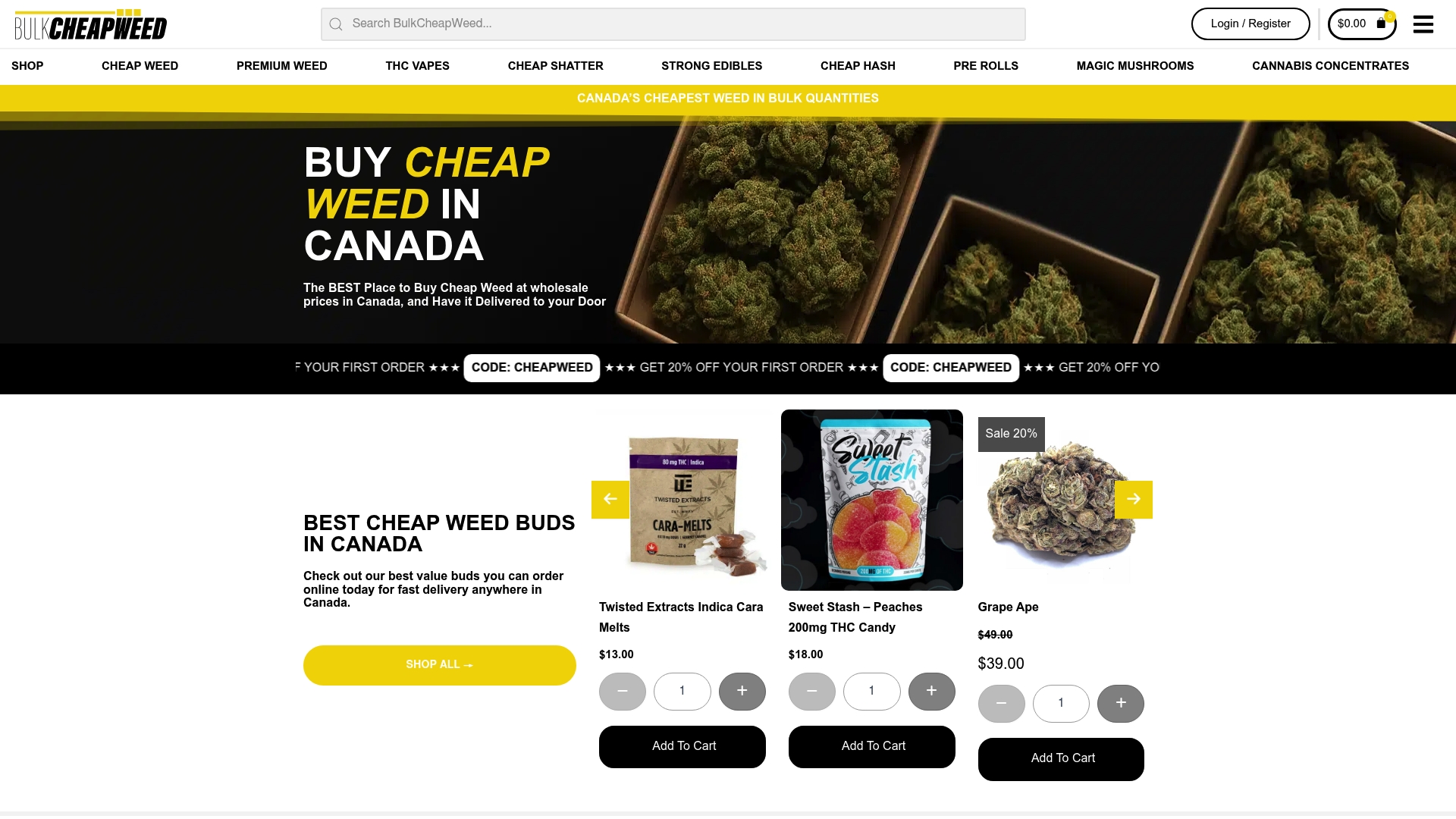
Whether you’re leaning toward a distillate vape cartridge for consistent dosing or a full spectrum tincture for a fuller effect profile, every listing includes the potency and product details you need to compare before you buy. If you’re newer to concentrates and want to start conservative, browsing terpene forward strains built for lower dose experiences is a solid way to ease in without overcommitting to a high potency product on your first order. Head to the shop, filter by product type, and check the listed cannabinoid percentages against your dosing plan before checkout.
Sources
Claims in this article draw on peer reviewed cannabinoid research from PMC7324885 and PMC5877694, consumer health explainers from Medical News Today, and Canada’s Cannabis Act.
This article is general information, not a substitute for advice from a qualified doctor. Consult a qualified healthcare professional about your own circumstances before acting on anything here.
- PMC7324885 — review on cannabinoid interactions
- PMC5877694 — cannabinoid pharmacology review
- Cannabis Act (Canada) — Justice Laws Website