

A standard 10 mg THC edible package in Canada typically runs $5 to $15, depending on brand, ingredients, and format. The federal 10 mg cap on THC per package means potency rarely explains the price gap between two products. Judge value by cost per mg instead, and multipacks almost always beat single packs on that math.
TL;DR:
- Buying multipacks usually offers better value than single packs because the cost per milligram drops by at least 20 percent when purchasing larger quantities.
- Provincial retailers tend to have consistent prices with predictable sales, while private online shops frequently fluctuate prices through seasonal deals.
- Prices for single 10 mg edibles generally range from $5 to $16 depending on format, with multipacks costing between $20 and $60 for significantly lower per-milligram rates.
- Red flags for potential scams include prices below $0.10 per mg, missing or expired lab certificates, and listing prices that exclude shipping or taxes until checkout.
- Regular buyers should aim for a target cost of $0.10 to $0.25 per mg, prioritizing multipacks and comparing total cost including shipping and taxes before purchasing.
Table of Contents
- What drives edible prices in Canada?
- How much do edibles cost by type and pack size?
- How do you calculate cost per mg to spot a good deal?
- Do prices differ by province or retailer type?
- How can you shop smarter for edible prices in Canada?
- How does Bulkcheapweed approach edible pricing for Canadians?
- Get better value on edibles without the guesswork
- Where does this pricing data come from?
- Sources
What drives edible prices in Canada?
Health Canada caps THC at 10 mg per package for any legal cannabis edible sold in the country. That single rule explains a lot about why a $6 gummy pack and a $14 gummy pack can carry the exact same dose. Since potency is fixed by law, brands compete on everything else: flavor, texture, ingredient sourcing, and how many mg come per bag versus per box.
Because the ceiling is regulatory, competition mostly plays out on brand positioning and multipack economics rather than potency, which is why two 10 mg packages can sit ten dollars apart. Several fixed costs sit underneath every legal edible, regardless of brand:
- Lab testing. Every batch needs third-party potency and contaminant testing before it reaches a shelf.
- Child-resistant packaging. Health Canada mandates specific packaging standards, and compliant packaging costs more than a standard wrapper.
- Labeling and compliance. THC content, health warnings, and standardized cannabis symbols all add production overhead.
- Provincial distribution fees. Licensed producers pay markups to provincial wholesalers before a product ever reaches an online store.
Format matters too. A basic fruit gummy pack costs less to produce than a chocolate bar with couverture chocolate, or a beverage that needs cold-chain shipping and can-filling equipment. Baked goods sit in between, since they often use simpler ingredients but have shorter shelf lives that push up per-unit cost. None of this is unique to cannabis. Ordinary confectionery brands price the same way, charging more for real cocoa and specialty flavors than for basic fruit chews. Edibles just add a regulatory layer on top of that same food economics.
How much do edibles cost by type and pack size?
Price bands vary noticeably by category, even though every legal package tops out at 10 mg of THC. Here’s what Canadian shoppers typically see across formats:
- Gummies (single 10 mg pack): roughly $5 to $12, the most competitively priced category because production is simple and margins are thin.
- Chocolates (single 10 mg pack): roughly $6 to $15, with premium or single-origin cocoa options pushing toward the top of that range.
- Beverages (single 10 mg can): roughly $6 to $14, reflecting cold-chain and canning costs on top of the cannabis compliance layer.
- Baked goods (single 10 mg item): roughly $6 to $16, since freshness constraints limit shelf life and drive up unit economics.
- Multipacks (multiple 10 mg units per box): total prices often land between $20 and $60 for a 4 to 10 pack box, which usually works out cheaper per mg than buying singles.
Two quick calculations show why multipacks change the math. A single 10 mg gummy pack at $10 works out to $1.00 per mg. A 5 pack box of the same product at $35 delivers 50 mg total, or $0.70 per mg. Gourmet and small-batch products, especially chocolates using specialty cocoa or infused-flower goods, routinely sit 20 to 40 percent above standard pricing in the same category, and that premium reflects ingredient quality more than it reflects extra THC.
How do you calculate cost per mg to spot a good deal?
Cost per mg is the single most useful number in edible shopping, and it’s simple to calculate: divide the total package price by the total mg of THC in the box. A $12 pack with 10 mg total costs $1.20 per mg. A $30 box with 100 mg total (ten 10 mg pieces) costs $0.30 per mg. Same product category, very different value.
For regular buyers, a reasonable target is $0.10 to $0.25 per mg, a range that rewards multipack purchasing without pushing you toward suspiciously cheap listings. Occasional users buying a single 10 mg pack for a one-off evening will naturally land above that range, and that’s a fair trade for convenience rather than a sign of a bad deal.
A few red flags are worth watching for before checkout:
- Listed prices that don’t include shipping until the final checkout screen, which can quietly add $10 or more.
- Lab certificates that are missing, expired, or not tied to the specific batch you’re buying.
- Prices dramatically below $0.10 per mg on brand-name products, which often signals an illicit or mislabeled listing rather than a genuine discount.
- Vague or missing THC-per-unit labeling, since that makes an accurate per-mg calculation impossible.
Pro Tip: Keep a simple note on your phone with the cost-per-mg math for the last few products you’ve bought. Comparing new listings against your own recent purchases catches inflated “sale” pricing faster than any promo banner does.
Do prices differ by province or retailer type?
Yes, and the gap is often bigger than shoppers expect. Provincial retailers, like the government-run Ontario Cannabis Store, tend to post transparent, fixed pricing with predictable promotional cycles, while private licensed online retailers sometimes undercut those prices through bulk sourcing or seasonal deals, but with less consistency from week to week.
A few patterns show up consistently across the country:
- Provincial stores publish set prices with occasional site-wide sales, so day-to-day variation is small.
- Private online retailers can move faster on discounts, which sometimes means better deals but also more price swings.
- Provincial sales tax and point-of-sale fees stack on top of the sticker price everywhere in Canada, so the number on a product page is rarely the final total.
- Retail catalogs, like NSLC’s edibles section in Nova Scotia, show that regional catalogs vary in selection even when THC caps stay identical nationwide.
Shipping delays and rural surcharges during winter months can also nudge effective prices up temporarily, separate from the listed product price itself.
How can you shop smarter for edible prices in Canada?
Turning all this into a repeatable shopping habit takes about thirty seconds per purchase once you know the steps:
- Calculate cost per mg first. Divide total price by total mg before comparing anything else.
- Compare multipack math against single packs. If the per-mg price drops by 20% or more in a multipack, and you’ll actually use the full box before it expires, buy the multipack.
- Factor in shipping and tax before you commit. A “cheaper” listing with a $15 shipping fee can end up costing more than a slightly pricier product with free shipping over a threshold.
- Check the lab certificate against the batch number printed on your actual package, not just the one shown in marketing photos.
Occasional users are usually better off with single 10 mg packs, since a multipack sitting half-finished in a drawer for months isn’t really a deal. Regular users get the most value from committing to multipacks and tracking cost per mg the way a grocery shopper tracks price per liter or per kilogram.
Pro Tip: If a listing shows flavor variety inside a strain lineup, like the profile described in Green on the Go Delivery’s Candy Krush strain guide, that same flavor-driven pricing logic often carries over into edibles made from similar genetics.
How does Bulkcheapweed approach edible pricing for Canadians?
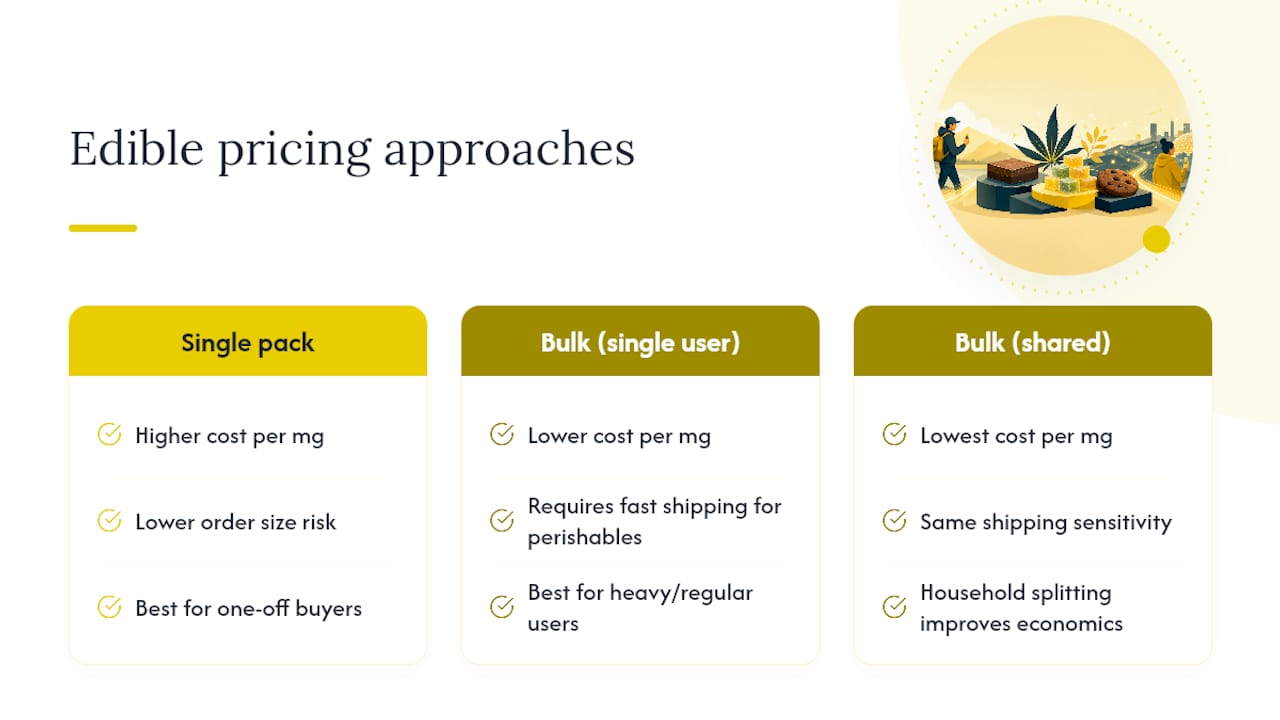
Some bulk-buying models use similar math: buying more per order drops your cost per mg, which many shoppers may overlook. Fast, discreet shipping matters too, since a slow delivery on a temperature-sensitive edible or beverage isn’t just an inconvenience, it’s a quality risk.
What gets missed in most pricing guides is that bulk buying isn’t just for heavy users. A household splitting a multipack order between two or three people hits better cost-per-mg numbers than each person buying single packs separately, and that math holds whether you’re an occasional edible shopper or someone restocking every month.
— Supherbs
Get better value on edibles without the guesswork
Bulk-pricing models exist to push cost per mg down for shoppers who want to avoid single-pack markups on restocking. Once you know your target range, roughly $0.10 to $0.25 per mg for regular purchases, the fastest way to hit it consistently is buying from a catalog built around multipack value instead of one-off convenience pricing.
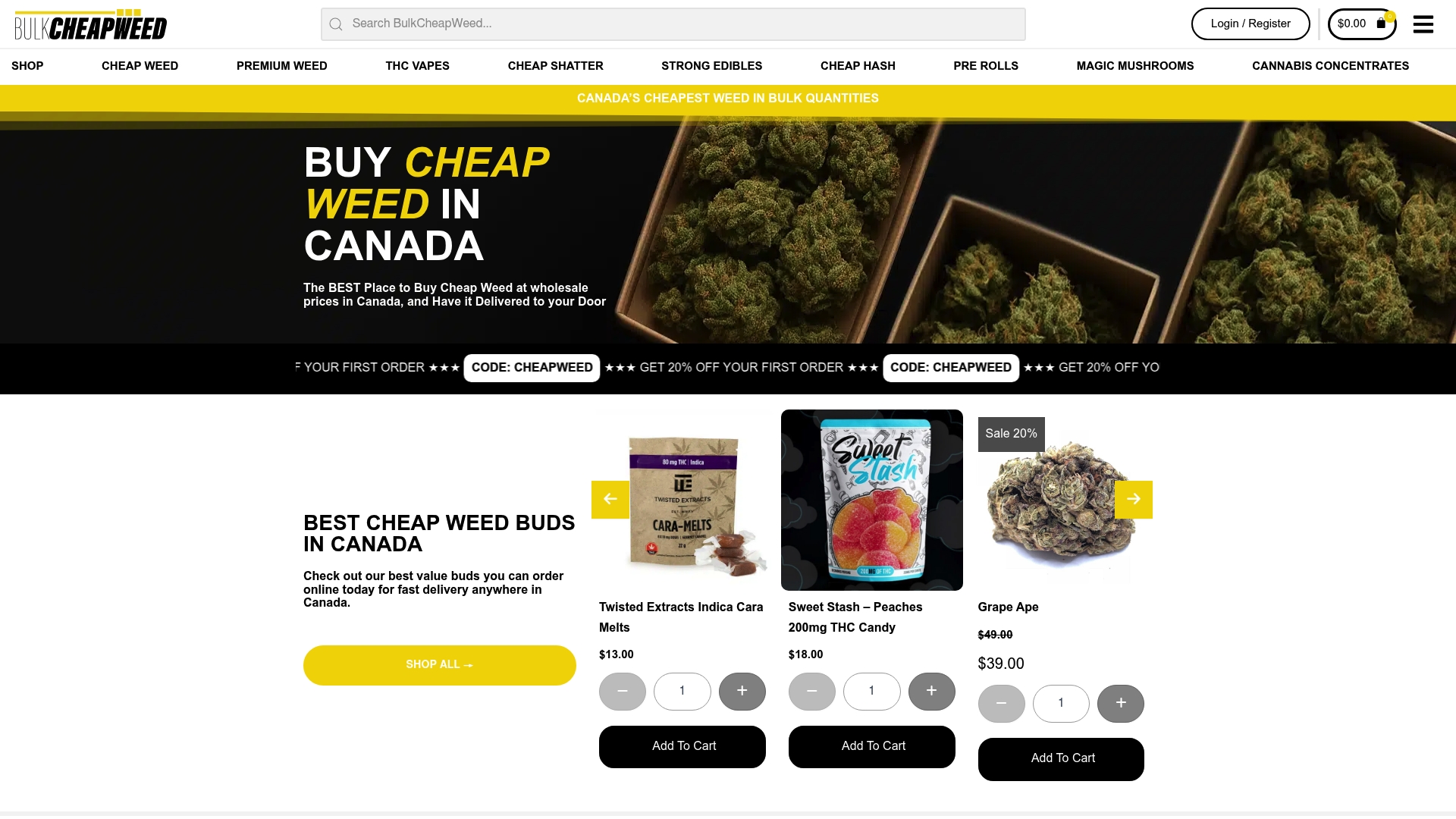
Browse the current edibles lineup in the Bulkcheapweed shop and run the cost-per-mg math on a multipack before you check out. If you’re curious how edibles compare to smoking on cost and effect, the edibles versus smoking breakdown is worth a read before your next order.
Where does this pricing data come from?
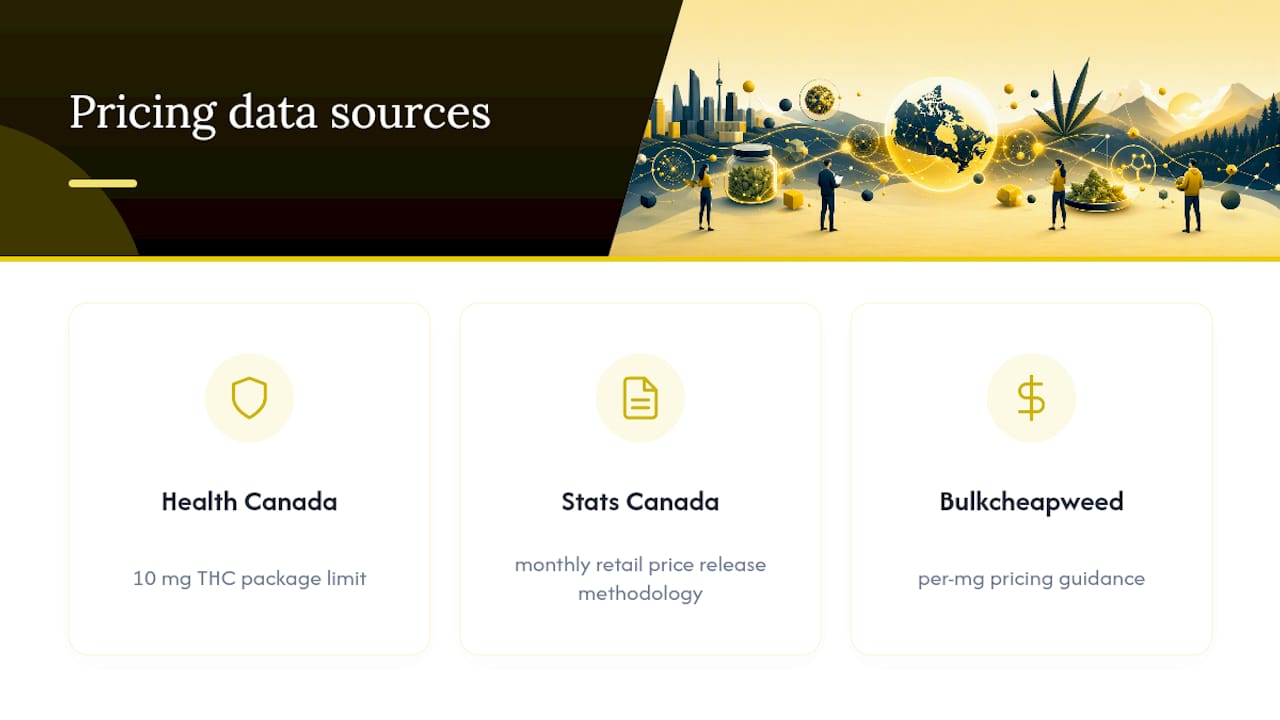
Pricing figures reference Health Canada’s edible cannabis classification rules, which set the 10 mg THC package limit, and Statistics Canada’s monthly retail price release, which explains the methodology behind national retail price tracking. Cost-per-mg benchmarks draw on Bulkcheapweed’s own per-mg pricing guidance.
Sources
- Health Canada — Classification of edible cannabis
- How much does weed cost in Canada in 2026 — LookyWeed
- Monthly average retail prices for selected products — Statistics Canada