

Ship edibles early in the week using an expedited service, pack the product in a discreet odour-proof inner container, add insulation and a matched coolant, and use temperature monitoring for high-value or melt-prone items. Canadian sellers must still keep the outer box anonymous and follow Health Canada labelling rules on the immediate container. None of these packaging steps change possession limits or labelling law: they protect texture and potency, nothing more.
TL;DR:
- Shipping chocolate or infused edibles requires longer protection than gummies, justifying the use of EPS foam shippers and expedited service for high-melt products.
- Using preconditioned gel packs and matching insulation to the route minimizes melting risks, especially for cross-country or long-distance shipments.
- Failing to minimize transit time in hot weather causes more damage than over-insulating, making carrier choice and scheduling critical for product integrity.
- Canadian regulations demand anonymous outer packaging and proper labelling for immediate containers, with strict rules on dry ice and hazard declarations for long lane shipments.
- Retailers should establish clear temperature thresholds and require photo documentation at delivery to efficiently handle heat-related disputes.
Table of Contents
- Quick-action checklist for shipping edibles in warm weather
- Packaging materials and insulation options: pick the right shell
- Coolants and hazards: gel packs, PCM, and dry ice, safe use and carrier rules
- Carrier selection and timing: reduce transit heat exposure
- Canadian labelling, packaging and legal constraints that affect summer shipments
- Retailer pass/fail criteria, temperature monitoring, and customer policy
- How Bulk Cheap Weed implements warm-weather shipping practices
- Trade-offs and why minimizing transit time often beats over-insulating
- Bulk Cheap Weed: discreet shipping and warm-weather pack options
- Sources
- FAQ
Quick-action checklist for shipping edibles in warm weather
Warm-weather shipping failures almost always come down to timing, not a lack of ice packs. A parcel that sits in a hot delivery hub over a weekend will suffer more than one that spends a single overnight in transit with modest insulation. Retailers and individual shippers both benefit from working through the same short list before a box leaves the building.
- Book Monday or Tuesday pickup with an expedited service so the parcel does not sit through a weekend of hub dwell.
- Match insulation and coolant to the product: chocolate-based edibles need more protection than gummies, which tolerate brief warmth better.
- Pack an odour-proof, tamper-evident immediate container first, then place it inside an anonymous outer box that reveals nothing about its contents.
- Add a temperature monitor or single-use data logger for high-value shipments where a dispute over melting would be costly.
- Set arrival pass/fail criteria in advance and tell the customer at checkout what warm-weather packaging options exist.
None of these steps requires exotic equipment. A retailer that consistently applies this order of operations will resolve fewer complaints than one that just throws in extra gel packs and hopes for the best.
Packaging materials and insulation options: pick the right shell
Insulation only works if it matches the product and the route. An insulated mailer with a single thin foam liner is fine for a short regional lane and a gummy-based product. A corrugated shipper with expanded polystyrene (EPS) foam and thermal bubble liners holds a stable temperature far longer and suits chocolate or longer cross-country lanes.
- Insulated mailers: lightweight, low cost, adequate for short lanes and low-melt products like gummies.
- EPS foam shippers: heavier and more expensive, but they hold temperature far longer, which matters for chocolate or infused baked goods.
- Thermal bubble liners: a middle option, cheap to add and useful as a secondary layer inside a standard box.
Over-insulating carries its own cost. A box padded far beyond what the route requires adds shipping weight, raises material costs, and generates packaging waste that a shorter transit time would have made unnecessary. The goal is the minimum insulation that gets the product through its actual transit window intact, not the maximum insulation available.
The packing order matters as much as the materials. Start with the odour-proof, tamper-evident immediate container holding the product itself. Place the coolant above the product, since cold air sinks and will cool the load more evenly from the top down. Add void fill to stop movement, then the insulation layer, then close it inside the anonymous outer box.
A simple decision rule covers most cases: short regional lane plus a low-melt product needs only an insulated mailer and a single gel pack; a national lane plus chocolate or a temperature-sensitive infused item calls for an EPS shipper, a matched coolant, and expedited service.
Pro Tip: Precondition your coolant in a freezer for a full 24 hours before packing. A gel pack that starts warmer than freezing loses most of its useful hold time before the box even leaves the building.

Coolants and hazards: gel packs, PCM, and dry ice, safe use and carrier rules
Most domestic Canadian shipments do not need dry ice. Gel packs and phase change material (PCM) packs are adequate for shorter lanes and lower-melt products, and they avoid the handling complications that come with dry ice. Reserve dry ice for long, multi-day lanes carrying high-melt products, and only when the carrier explicitly accepts it.
- Gel packs and PCM suit lanes under roughly a day or two and products like gummies or hard candies that tolerate brief warmth, based on industry practice.
- Dry ice requires venting so pressure cannot build inside a sealed container, plus a hazardous materials declaration and carrier-specific acceptance rules that vary by service according to carrier policies.
- Air travel liquid and gel limits cap carry-on items at 100 ml or 100 g per container under CATSA rules, which affects gel-based coolants and rules out several edible formats for cabin baggage entirely.
- Never double-seal a box containing dry ice: an airtight container with venting can trap pressure and become a safety hazard.
A parcel packed with dry ice in an unvented container risks pressure buildup during transit, which is why carriers require specific labelling and handling before they will accept it, per CATSA’s carry-on guidance on restricted items. Confirm a carrier’s dry-ice policy before you build a shipment around it: not every courier accepts it, and the ones that do often require a written hazardous materials declaration on the label.
Carrier selection and timing: reduce transit heat exposure
The single biggest driver of melt is time spent sitting in a hot vehicle or a warehouse dock, not the thickness of the insulation. A parcel that reaches its destination in one overnight hop with modest packaging will usually arrive in better condition than one that spends three days in transit wrapped in heavy foam. Route speed deserves more attention than insulation budget.
- Ship Monday or Tuesday using an expedited parcel service such as Canada Post Xpresspost or a comparable courier express tier, so the parcel avoids sitting through a weekend.
- Reserve specialty cold-chain carriers for genuinely long or high-value lanes where a standard expedited service cannot guarantee a short enough transit window.
- Schedule pickup for early morning rather than end of day, and require a signature or hold-for-pickup at a depot to prevent a parcel baking on a porch after a failed delivery attempt.
- Treat long prairie or interior BC routes differently than short regional ones: these lanes often justify a regional fulfillment point or a faster service tier rather than heavier insulation.
A checkout flow that lets customers pick expedited service and confirms delivery timing upfront does more to protect product quality than any packaging upgrade, and it gives sellers a documented record for tracking if a dispute comes up later.
Canadian labelling, packaging and legal constraints that affect summer shipments
Summer packaging choices still have to work within federal rules that do not change with the season. Health Canada’s packaging and labelling guide requires the immediate container to list total THC per unit, ingredient and allergen details, and other mandatory fields. Edible cannabis in Canada is also subject to a precautionary limit of 10 mg THC per immediate container, under amendments to the Cannabis Regulations. These requirements apply to the immediate container itself, not to the insulated shell or the outer box around it.
- Keep the outer box anonymous: Canada Post’s cannabis mailing guidance requires shipments to give no visual indication of cannabis content.
- Use an odour-resistant inner container even though it is a recommendation rather than a strict rule, since it reduces complaints and keeps packaging discreet.
- Confirm minimum weight and processing practices for licensed-seller shipments, which Canada Post handles differently from ordinary parcels.
- Ship domestically only: sending cannabis across the Canadian border in either direction risks seizure, since CBSA enforcement actions show consistent scrutiny of unauthorized cross-border cannabis movement.
A short pre-shipment checklist helps: immediate container labelled correctly, inner packaging odour-resistant and tamper-evident, outer box anonymous, destination confirmed as domestic, and coolant plus insulation matched to the route.
Retailer pass/fail criteria, temperature monitoring, and customer policy
A written quality standard turns a subjective complaint into a fast, defensible decision. Retailers who define pass/fail conditions before the shipping season starts spend far less time negotiating individual refunds later.
- Set a numeric arrival threshold: for example, flag any shipment for review if a logger shows the parcel exceeded a defined temperature for more than a set number of hours.
- Treat visible melting on an unopened immediate container as an automatic fail, regardless of what the logger shows.
- Choose a monitoring tool that fits the shipment’s value: single-use temperature indicator strips are cheap and adequate for routine orders, while a simple reusable data logger suits higher-value or repeat-risk lanes.
- Collect documentation immediately on delivery: timestamp, photos of the unopened package, tracking history, and the logger readout if one was used.
- State the policy at checkout, including a warm-weather packaging add-on, an expedited shipping option, and a plain-language note that summer heat can affect texture even with protective packaging.
Pro Tip: Ask customers to photograph a suspect shipment before opening it. A photo of the sealed immediate container settles most melt disputes faster than a phone call.
How Bulk Cheap Weed implements warm-weather shipping practices
Some retailers sell bulk cannabis products, including edibles, with discreet packaging, order tracking, and a customer satisfaction guarantee. Those practices line up directly with the operational steps in this guide: an anonymous outer box, an odour-resistant inner package, and a tracking number a customer can check against expected delivery timing.
At checkout, a retailer following this model can offer warm-weather packaging and expedited shipping as add-on choices rather than folding the cost into every order automatically; for those seeking high-quality cannabis genetics, Montreal Cannabis Seeds | Best Canadian Marijuana Seeds offers excellent options that complement the retail shipping experience. That keeps pricing fair for customers ordering low-melt products like gummies in cooler weather while still protecting chocolate-based orders shipped in July. Pairing that choice with a tracking link gives customers a way to plan for delivery and reduces the number of parcels left sitting on a porch in the heat.

Trade-offs and why minimizing transit time often beats over-insulating
Packaging budgets are finite, and the instinct to add another gel pack or thicker foam liner usually costs more than it delivers. In practice, a parcel that ships Monday morning and arrives the next day with basic insulation holds up better than one shipped Thursday with premium packaging that then sits through a weekend. Scheduling and carrier choice do more work than most sellers expect.
Refund decisions deserve the same discipline. A generous but undefined refund policy invites disputes, while sustainable packaging choices only make sense once the shipping schedule itself is reliable. Readers who want a supplier already built around these habits will find a practical option in the section below.
— Supherbs
Bulk Cheap Weed: discreet shipping and warm-weather pack options
Some retailers sell edibles and other cannabis products with discreet packaging and tracking built into orders shipped across Canada. For a reader trying to time a summer order around the practices covered in this guide, that means the groundwork, anonymous outer packaging, odour-resistant inner packing, and a tracking number, is already part of how orders move.
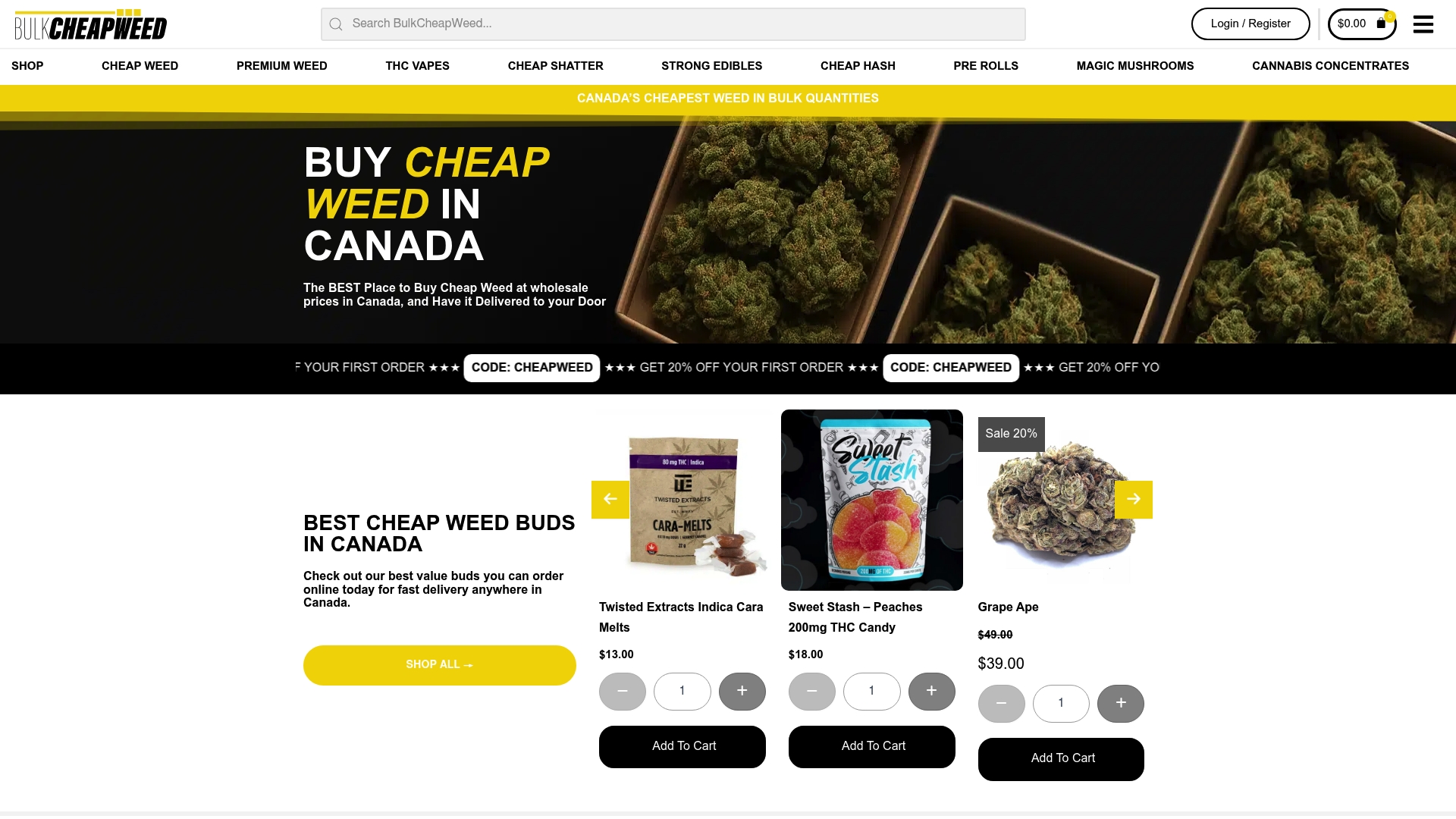
- Bulk pricing on edibles and other categories including flower, shatter, and concentrates.
- Discreet, anonymous outer packaging on every shipment across Canada.
- Order tracking so you can plan for delivery instead of guessing.
- A customer satisfaction guarantee backing the order.
Shoppers who want extra protection during hot months can choose expedited shipping at checkout, the same timing strategy this guide recommends for minimizing heat exposure. Browse the full product catalog to place an order and pick the shipping option that fits the season.
Sources
Before finalizing a summer shipping process, check the primary sources directly. Health Canada’s packaging and labelling guide covers required immediate-container fields like total THC per unit. Canada Post’s cannabis mailing page covers anonymous outer packaging and odour-control recommendations. CBSA’s enforcement notices illustrate the risk of cross-border shipment. Individual carrier pages should always be checked separately for current dry-ice and hazardous-material acceptance rules, since these vary and change.
- SOR/2019-206 (Cannabis Regulations amendments) — Canada Gazette
- ABCs of mailing – Cannabis | Canada Post
- Packaging and labelling guide for cannabis products – Health Canada
- Canada
FAQ
Can I legally buy edibles in Canada and bring them home?
Yes, adults in provinces and territories where cannabis edibles are legal can buy them from a licensed retailer and bring them home for personal use within that jurisdiction. Crossing a provincial border with cannabis can run into different provincial rules, so check local regulations before traveling with an order.
Is edibles legal in Canada?
Edible cannabis is legal for adults to purchase and possess in Canada, subject to federal rules including a precautionary limit of 10 mg THC per immediate container. Products must also meet Health Canada’s labelling requirements for immediate containers.
How many edibles can you travel with in Canada?
Federal rules cap possession in public at a defined amount of dried cannabis or its legal equivalent, and edible products carry their own THC limits per immediate container under Health Canada’s regulations. Provincial possession and travel rules can add further limits, so confirm the rule for your specific province before a trip.
Can you put edibles on a plane?
Domestic air travel with legally purchased edibles is generally permitted within Canada, but liquid or gel-based products are capped at 100 ml or 100 g in carry-on under CATSA’s carry-on rules. Solid edibles like gummies typically face fewer restrictions than liquid tinctures or syrups, and international travel with cannabis remains prohibited regardless of format.
Why do edibles melt or degrade in summer shipping?
Heat softens fats and sugars in chocolate-based and gummy edibles, which changes texture even when potency stays intact, and prolonged heat exposure can gradually affect potency over time. Matching insulation and coolant to the product and minimizing transit time both reduce this risk significantly.