

Most people describe magic mushroom taste as dry, earthy, and often bitter, with a chalky or “farinaceous” quality that lingers on the tongue. Texture makes it worse than a quick bite of food would suggest, since chewing dried caps means minutes of contact with that flavor, not seconds. The exact profile shifts depending on species and whether the mushrooms are fresh or dried, but if the taste sounds like a dealbreaker, tea, chocolate, and capsules all sidestep it almost entirely.
TL;DR:
- The taste of magic mushrooms is predominantly earthy, musty, and bitter, with a farinaceous, chalky texture that lingers after chewing dried caps.
- Fresh mushrooms have a milder flavor and a spongy texture, while drying concentrates bitterness and earthiness, making the flavor sharper and longer-lasting.
- Variations in taste depend on mushroom species, drying method, storage conditions, and possible contamination, which can alter flavor intensity and quality.
- Masking taste through methods like tea, chocolate, capsules, or food pairings significantly reduces unpleasant flavors and can also help lower nausea risk.
- Proper preparation and sourcing are more effective than strain selection in managing flavor, with extraction techniques and formulation choice playing a key role.
Table of Contents
- What Does Magic Mushroom Taste Actually Resemble?
- Fresh Vs. Dried: Why Texture Changes Everything
- Why Does Every Batch Taste a Little Different?
- What the Chemistry Behind the Flavor Actually Shows
- How to Reduce or Mask the Taste Before You Eat
- Nausea, Digestion, and How Taste Plays a Role
- Why Getting the Preparation Right Matters More Than the Species
- A Practical Next Step for Sourcing Quality Mushrooms
- Sources
- FAQ
What Does Magic Mushroom Taste Actually Resemble?
Ask ten people what psilocybin mushrooms taste like and you’ll get some version of the same handful of words. The flavor profile of magic mushrooms tends to cluster around a few recognizable notes rather than anything genuinely new or exotic.
The most common descriptors people reach for:
- Earthy — like fresh dirt or a forest floor after rain
- Musty — a basement or old-cardboard quality, especially in dried caps
- Farinaceous — a flour-like, starchy texture that coats the mouth
- Bitter — the aftertaste that lingers longest and bothers people most
- Metallic or faintly nutty — occasionally reported in specific strains, sometimes with a whisper of vanilla
Everyday comparisons help more than technical terms. People frequently compare the taste to stale sunflower seeds, raw pumpkin seeds, or plain cardboard with a bitter edge. That combination isn’t accidental. A good rule of thumb: if the mushroom smells musty or “off” before you eat it, expect the same unpleasantness in the mouth. Smell is a fairly reliable preview of taste here, and a genuinely bad odor is one of the clearest signs of poor drying or storage rather than just “how shrooms taste.”
Fresh Vs. Dried: Why Texture Changes Everything
Texture does more to shape the experience than flavor alone, and fresh and dried mushrooms deliver two very different mouthfeels.
- Fresh mushrooms have a spongy, slightly rubbery bite with a milder initial taste. The flavor is there, but it’s diluted by moisture, closer to eating a slightly bitter mushroom you’d find in a grocery produce aisle, though psilocybin species differ from culinary varieties in more than just taste.
- Dried mushrooms turn leathery and tough, almost cracker-like when snapped. Drying concentrates everything, so the bitterness and earthiness that were mild fresh become sharp and lingering once the water is gone.
- Chewing time matters more than most people expect. Tougher, drier pieces take longer to break down, which means more saliva contact and a longer bitter aftertaste, one reason dried mushrooms trigger nausea more often than fresh ones.
That longer chew time is also why masking dried mushrooms is harder than masking fresh ones. There’s simply more surface area and more time for the compounds responsible for the taste to hit your receptors.
Why Does Every Batch Taste a Little Different?
Anyone who has eaten more than one batch of mushrooms notices the taste isn’t consistent, and there are real reasons for that variation.
- Species and strain: Some strains get reported anecdotally as more bitter than others, and people often link that bitterness to higher perceived potency, though this connection isn’t rigorously proven.
- Age and storage: Mushrooms that sit too long, especially in humid conditions or poor containers, develop stronger musty or sour notes. How you store dried mushrooms directly affects how they taste weeks later.
- Drying method: Slow, humid drying versus fast, low-heat drying changes both texture and flavor intensity.
- Contamination or residue: Substrate residue, improper handling, or lingering moisture can introduce off-flavors that have nothing to do with the mushroom’s natural profile and everything to do with how it was grown or dried.
Potency also varies by strain, and stronger batches sometimes get described as harsher tasting, though taste and potency don’t move in lockstep the way people assume.
What the Chemistry Behind the Flavor Actually Shows
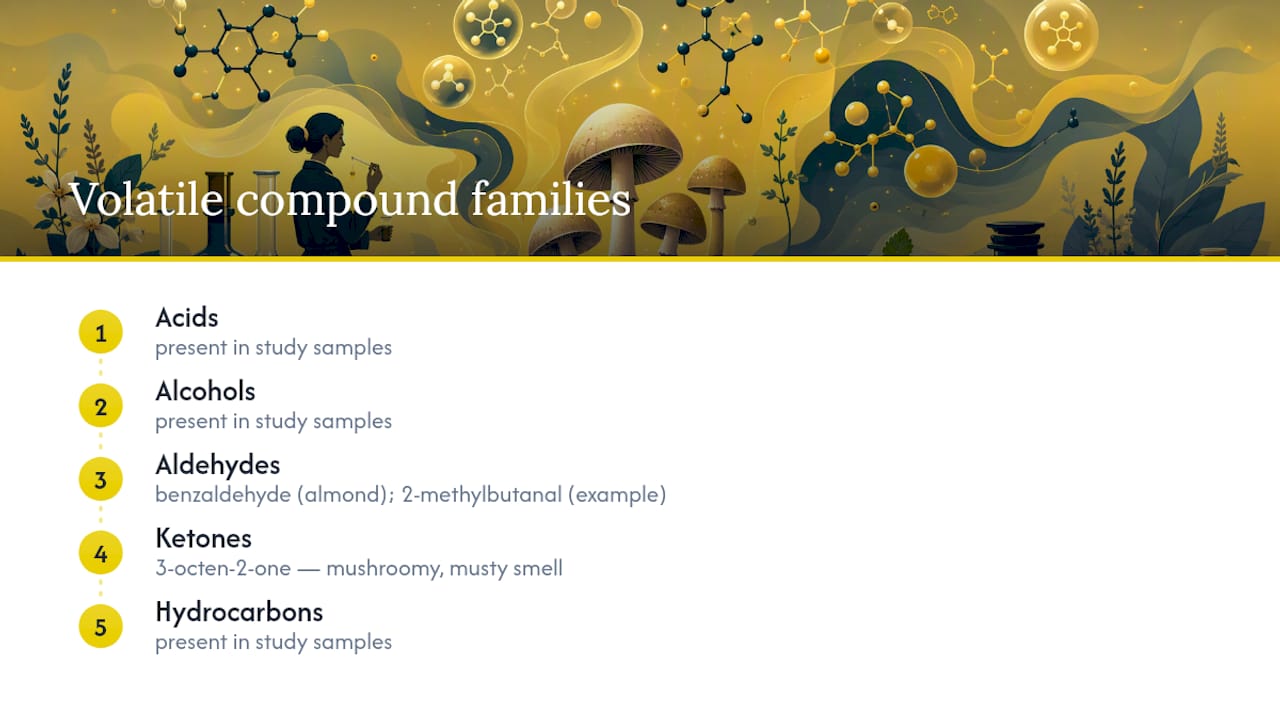
A Vac-HS-HC-SPME and GC–MS study comparing psilocybin and non-psilocybin mushrooms found the volatile compounds behind these flavors fall into a handful of chemical families: acids, alcohols, aldehydes, ketones, and hydrocarbons. Several compounds, including 2-methylbutanal, benzaldehyde, and 3-octen-2-one, showed up more consistently in psilocybin species specifically. Benzaldehyde carries a faint almond note, while ketones like 3-octen-2-one contribute to the mushroomy, slightly musty smell people associate with the fresh caps.
None of this means every psilocybin mushroom tastes identical. Compound levels shift based on species, growing conditions, and how the sample was prepared before testing, so treat these findings as a chemical explanation for common notes, not a universal flavor guarantee.
How to Reduce or Mask the Taste Before You Eat
If the flavor is the obstacle, several tested methods reduce exposure without changing the effects much.
- Tea: Steeping ground mushrooms in hot water extracts the psilocybin while leaving most of the fibrous, bitter material behind. Adding lemon, ginger, or honey covers what remains. Comparing tea against eating whole mushrooms shows real differences in both taste and onset.
- Chocolate and edibles: Chocolate’s fat and sugar content overwhelms bitterness almost completely, which is why dosing mushroom chocolate carefully matters. Uneven distribution in homemade batches is the biggest risk.
- Capsules: Grinding dried mushrooms into powder and filling capsules eliminates taste entirely. The trade-off is a slightly slower onset since the capsule needs to dissolve first.
- Smoothies and food pairings: Blending with fruit, peanut butter, or cacao overpowers the earthy bitterness with almost no prep work.
- Lemon tek: Soaking ground mushrooms in lemon juice before consuming trades one strong flavor (sour, citrusy) for another, and it can intensify and speed up the experience. This isn’t a beginner-friendly method.
Pro Tip: Use a dedicated grinder for mushrooms only, and weigh your dose before changing forms. Powder looks deceptively small compared to whole caps, and it’s easy to misjudge a dose once texture changes.
Nausea, Digestion, and How Taste Plays a Role
Chewing dried mushrooms for longer periods increases contact time between the fungal material and both your taste buds and your stomach lining, which is part of why nausea shows up so often as a reported effect. Official public-health guidance lists nausea among the common physical reactions, and notes that how you consume the mushroom, whether as tea, whole, or in capsules, can shift that response.
A few things that genuinely help:
- Ginger or peppermint, taken before or during onset, eases stomach upset for many people.
- Staying hydrated helps, while alcohol and heavy, fatty meals right before dosing tend to make nausea worse.
- Lower starter doses mean less material to chew and less digestive strain, which is worth checking against a dosage chart before you begin.
- Pacing yourself while eating, rather than forcing down a full dose quickly, reduces both the taste exposure and the gag reflex some people experience.
Legal status for psilocybin varies by location, so check your local regulations and rely on public-health sources rather than anecdotal advice for anything beyond taste and preparation.
Why Getting the Preparation Right Matters More Than the Species
The conventional wisdom treats taste as a fixed property of the mushroom itself, as if some strains are just “bad tasting” and others aren’t. That’s not quite right. Preparation method changes the experience more than strain selection does in most cases. A dried Psilocybe cubensis eaten whole and a Psilocybe cubensis of the same batch turned into tea taste like two different substances, even though the chemistry inside them is identical.
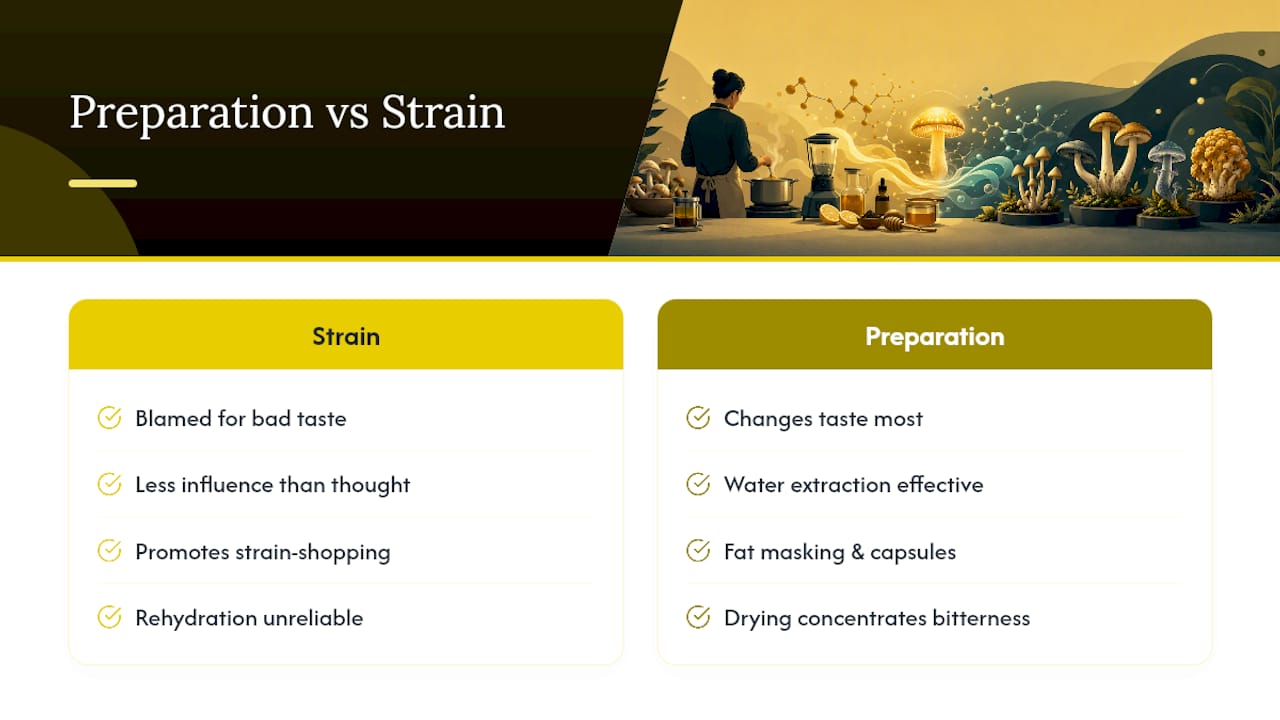
That distinction gets lost in a lot of consumer advice, which spends more time ranking strains by bitterness than explaining that drying itself is what concentrates the unpleasant compounds in the first place. Rehydrating dried mushrooms doesn’t reliably fix this either; it sometimes intensifies the earthy flavor rather than softening it, since the compounds have already broken down during drying.
If there’s one piece of overlooked advice worth repeating, it’s this: people fixate on finding a “better tasting” strain when the real fix is almost always in the preparation. Water extraction, fat-based masking, or full grinding into capsules solve the taste problem more reliably than strain-shopping ever will. Responsible sourcing and honest information about what you’re consuming matter just as much as the recipe you use to get it down.
— Supherbs
A Practical Next Step for Sourcing Quality Mushrooms
Taste is easier to manage when you’re starting with a well-stored, properly dried product instead of guessing at quality from an unfamiliar source. Some bulk suppliers source cannabis and psilocybin products in ways that keep prices lower than boutique retailers while still offering a product catalog to compare before you buy.
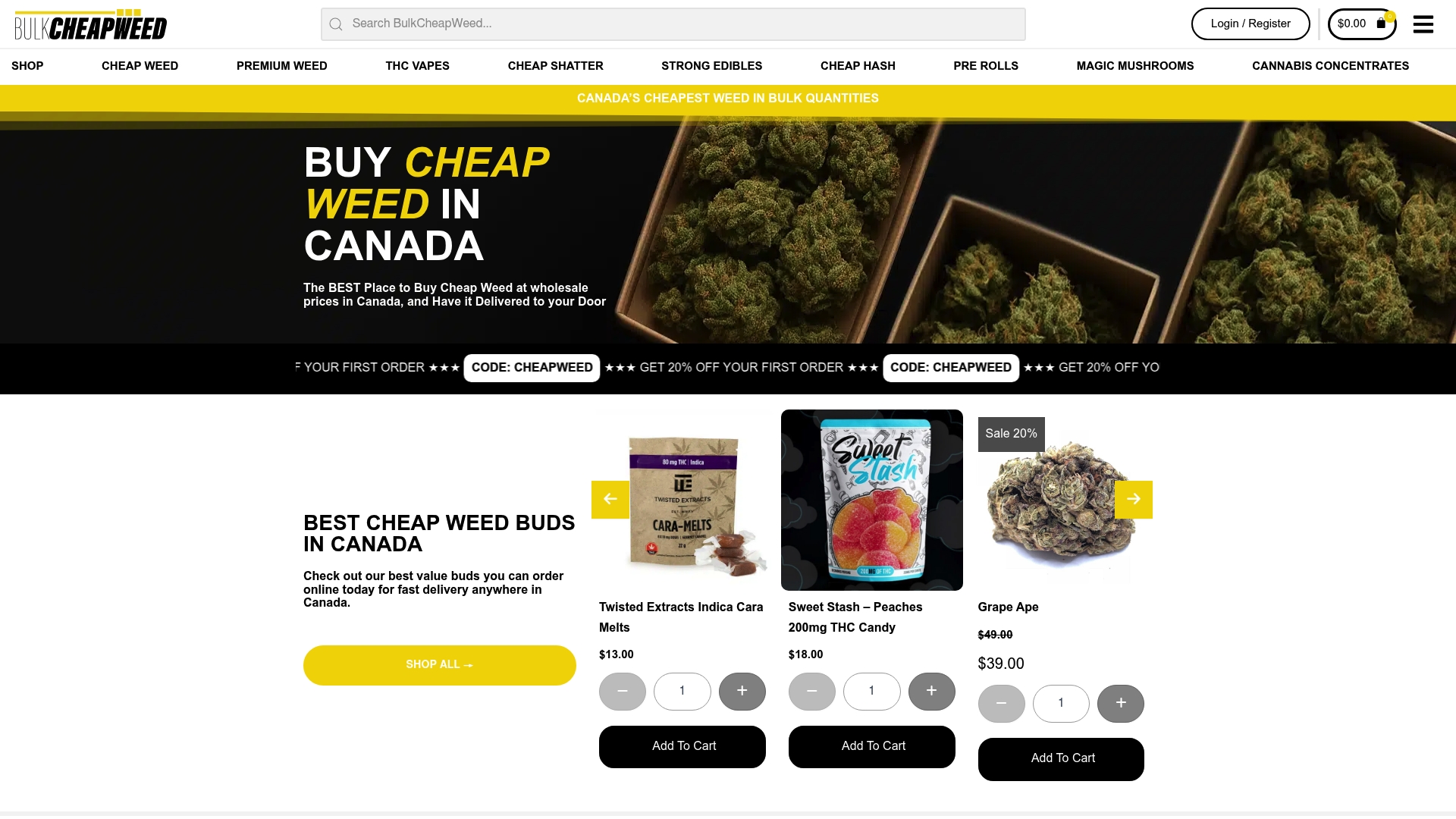
Whether you’re planning tea, capsules, or chocolate edibles, check product details and dosing guidance before ordering, and confirm what’s legal where you live. Bulkcheapweed’s shop lets you browse available options directly, and if edibles are more your speed than raw mushrooms, the edibles online selection is worth a look before you check out.
This article is general information, not a substitute for advice from a qualified doctor. Consult a qualified healthcare professional about your own circumstances before acting on anything here.
Sources
FAQ
How do people usually describe mushroom taste?
Most descriptions land on dry, earthy, bitter, and slightly musty, with a chalky “farinaceous” texture that coats the mouth, especially in dried caps.
What does the psilocybin body high feel like alongside the taste?
Physical effects reported alongside the mental experience include nausea, changes in body temperature, and altered perception of gravity or heaviness, separate from the flavor itself.
Do shrooms taste bad enough to ruin the experience?
For many people, yes, the bitterness and lingering aftertaste are unpleasant enough that they switch to tea, capsules, or chocolate rather than eating dried caps whole.
Does fresh or dried change the taste much?
Yes. Fresh mushrooms taste milder with a spongy bite, while drying concentrates the bitter and earthy compounds into a stronger, longer-lasting flavor.
Can preparation method reduce nausea as well as taste?
Yes. Tea and capsules both reduce the amount of chewing and fibrous material your stomach has to process, which commonly lowers nausea risk compared to eating whole dried mushrooms.