

Yes, Canadian retailers sell mix-and-match edible bundles, and buying one is safe when you check the labels. Each immediate container still has to meet Health Canada’s 10 mg THC limit, so shop with label checks, add up your total THC before you eat anything, and follow “start low, go slow.” Some Canadian retailers offer options for assembling assorted, budget-friendly bundles that comply with these rules.
TL;DR:
- Canadian retailers can sell mix-and-match edibles as long as each product complies with Health Canada’s 10 mg THC limit per immediate container, and labels clearly show THC content for each item and the entire bundle.
- Building a safe bundle requires tracking total THC, choosing low-dose options, checking for allergen and child-resistant packaging, and comparing price per milligram of THC to find the best deal.
- Edible effects take 30 minutes to 2 hours to onset, peak around 2 to 4 hours, and can last up to 12 hours, making dose calculation and waiting time crucial for safety.
- The most common mistakes include not totaling THC doses correctly across multiple items and overlooking allergen labels, potentially leading to overdose or allergic reactions.
- A compliant, cost-effective bundle prioritizes low-dose units with clear labeling and uses price-per-milligram comparisons, rather than chasing higher potency or larger discounts.
Table of Contents
- What mix-and-match edible packs look like in Canadian retail
- Step-by-step checklist to build a safe, cost-effective edible bundle
- Dosing and safety: timing, stacking, and storage when mixing edibles
- How to calculate cost per milligram of THC and spot a real deal
- Health Canada labelling rules that affect mix-and-match bundles
- What buyers get wrong and how we help
- Our take on building a smarter edible bundle
- Shop mix-and-match edibles at Bulk Cheap Weed
- Canadian resources on edibles and labelling
- Sources
- FAQ
What mix-and-match edible packs look like in Canadian retail
A “mix and match” listing on a Canadian cannabis site usually means you are choosing several individually packaged products to fill one order, not buying one multi-flavor product off a shelf. Understanding the packaging terms helps you see what you are actually buying.
An immediate container is the package touching the product itself, a single gummy pouch, one chocolate bar wrapper, one drink can. A co-pack is the outer box or bag that holds several immediate containers together, something retailers use to sell variety at a better price. Health Canada permits co-packs as long as every immediate container inside meets packaging rules on its own, and the outer labelling clearly shows the per-unit and total THC.
In practice, bundles on Canadian dispensary sites tend to follow a few patterns:
- Gummy multipacks combining different flavors or fruit profiles at the same dose per piece.
- Mixed-format co-packs pairing chocolates, gummies, and drinks at varying potencies.
- “Build your own” sections where filters let you pick by product type, dose, or strain style before adding to cart.
- Sample packs aimed at new buyers who want to try several low-dose items before committing to a larger order.
Because the packaging rules apply at the immediate container level, retailers cannot just toss loose edibles into one bag. Every piece needs its own compliant wrapper and label, which is actually good news for shoppers: it means each item in your bundle carries its own dosing information, even when it ships inside a shared box.
Step-by-step checklist to build a safe, cost-effective edible bundle
Building a bundle that fits your tolerance and your budget takes a few minutes of planning before you start adding items to cart.
- Decide your dosing profile first. A daily low-dose user and someone shopping for a single weekend occasion need different bundles, so settle on your typical range before browsing.
- Pick complementary product types. Mix low-dose gummies for everyday use with a stronger chocolate or drink reserved for occasions, and consider a CBD-leaning option if you want effects without heavy intoxication.
- Add up total THC across every unit you plan to buy. Each immediate container tops out at 10 mg THC, but your bundle total climbs fast once you combine several units, so track the running sum.
- Check serving size and allergens on every label. A gummy and a chocolate bar in the same bundle can have very different serving sizes per dose, and nut or dairy allergens are easy to miss when you are comparing several products at once.
- Confirm child-resistant packaging on each item. This matters even more with a mixed bundle, since you are introducing several different container types into your home at once.
- Compare price per milligram of THC, not just the sticker price, and factor in whether your order clears a free-shipping threshold.
- Run a final pre-checkout check: labels readable, dose math done, and a storage plan ready before the package arrives.
Pro Tip: Keep a running note on your phone with the THC total as you add items to your cart, it takes thirty seconds and prevents an accidental overdose the night your bundle arrives.
For dosing cues on different product styles, sativa and indica edibles tend to be marketed around different effect profiles, which is worth factoring in when you are choosing what to pair with what.
Dosing and safety: timing, stacking, and storage when mixing edibles
Edibles behave differently than smoked or vaped cannabis, and that difference matters most when you are working through a bundle with several potencies in one sitting.
Onset for edible cannabis typically runs 30 minutes to 2 hours, with effects peaking around 2 to 4 hours and sometimes lasting as long as 12 hours. That slow, long curve is also why a 10 mg edible and a joint are not interchangeable doses. When THC is ingested and processed by the liver, it converts partly into 11-hydroxy-THC, a metabolite that tends to produce stronger, longer-lasting effects than inhaled THC. A beginner who swaps a joint for a 10 mg gummy assuming equivalent intensity is often caught off guard a couple of hours later.

One milligram often referenced as a starting point: Health Canada and CCSA guidance recommends many adults start with 2.5 mg THC, and very new users sometimes go even lower, around 1.25 to 2.5 mg, before working up. That caution gets more important as doses climb toward the 10 mg per-unit ceiling, where the margin for a rough experience narrows.
A few rules hold for any bundle, regardless of how many flavors or formats it contains:
- Wait at least 2 to 4 hours before considering a second dose, since edibles take time to peak.
- Avoid mixing cannabis with alcohol, which can intensify effects unpredictably, and check the research on edibles and alcohol before combining the two.
- Talk to a healthcare provider if you take prescription medications, since interactions vary by drug.
- Store the whole bundle in original child-resistant containers, out of reach of children and pets.
- Keep track of expiry dates, since a mixed bundle often arrives with several different manufacture dates.
For a deeper breakdown of onset and duration by product type, see how long edibles last, and for the storage side, a guide on how to store weed edibles covers freshness alongside the safety basics above.
How to calculate cost per milligram of THC and spot a real deal
Bundle pricing can look generous without actually being cheap once you work out what you are paying per milligram of THC, which is the only fair way to compare products of different sizes and potencies.
The formula is simple: divide the total price by the total milligrams of THC in the package. A small bundle priced at $18 for a moderate amount of THC works out to a certain price per milligram. A larger bundle priced at $40 for a larger total THC content works out to a lower price per milligram, a better rate even though the upfront price is higher.
As a rough shopping benchmark, aiming for $0.10 to $0.25 per mg is a reasonable target for mixed bundles, though lab-tested quality, brand reputation, and shipping costs all affect whether a lower per-mg price is actually a better deal. A bundle that clears a free-shipping threshold can shift the math further in your favor, so it is worth checking whether adding one more item pushes your order over that line before comparing final totals.

Health Canada labelling rules that affect mix-and-match bundles
Every bundle you buy in Canada has to clear the same packaging bar, regardless of how many products are inside the box.
Health Canada’s packaging and labelling guide sets the immediate container limit at 10 mg THC, and when a co-pack bundles several immediate containers together, the outer packaging must show both the per-unit THC and the total THC across the whole pack. That consistency rule is there so you are never guessing how much you are actually buying when several items ship in one box.
Labels on edible cannabis products are required to show:
- Total THC per unit and total THC for the full package.
- A complete ingredient list, including common allergen sources.
- Net weight or volume for each immediate container.
- Child-resistant packaging that meets the same standard across every item in the bundle.
If a product page or an arrived package shows inconsistent numbers between units, or a label field is missing entirely, that is a signal to contact the retailer before consuming anything. A compliant bundle should never leave you doing guesswork on what dose you are holding.
What buyers get wrong and how we help
The most common mistake with mix-and-match bundles is stacking without doing the math, grabbing a few 10 mg gummies and a drink and treating them as one dose instead of adding them up. The second most common mistake is skipping the allergen line entirely because a shopper is focused on flavor variety rather than ingredients.
Some retailers list per-unit THC clearly so shoppers can build a bundle without hunting through fine print, and offer enough product variety to keep a low-dose baseline and add one higher-potency item for a specific occasion rather than defaulting to the strongest option across the board.
Keep most of your bundle at a low, predictable dose, and treat anything above that as an occasional, deliberate choice rather than a default.
Our take on building a smarter edible bundle
The conventional advice on edibles stops at “start low, go slow” and leaves shoppers to figure out bundles on their own, which is where most of the real mistakes happen. A bundle is not one dose, it is several, and the math only gets harder once flavors and formats multiply. The reader who treats a mixed box as a single experience rather than a stack of individual choices is the one most likely to end up uncomfortable.
What gets overrated is potency chasing, buyers assuming a stronger single item makes a better bundle. What gets underrated is label consistency: a bundle where every unit clearly states its THC and allergen information is worth more than one with a slightly lower price and sloppier packaging. Prioritize building a dosing library of mostly low-dose units with one or two stronger pieces set aside, and let price-per-mg comparisons guide which retailer gets your order, not the size of the discount banner.
— Supherbs
Shop mix-and-match edibles at Bulk Cheap Weed
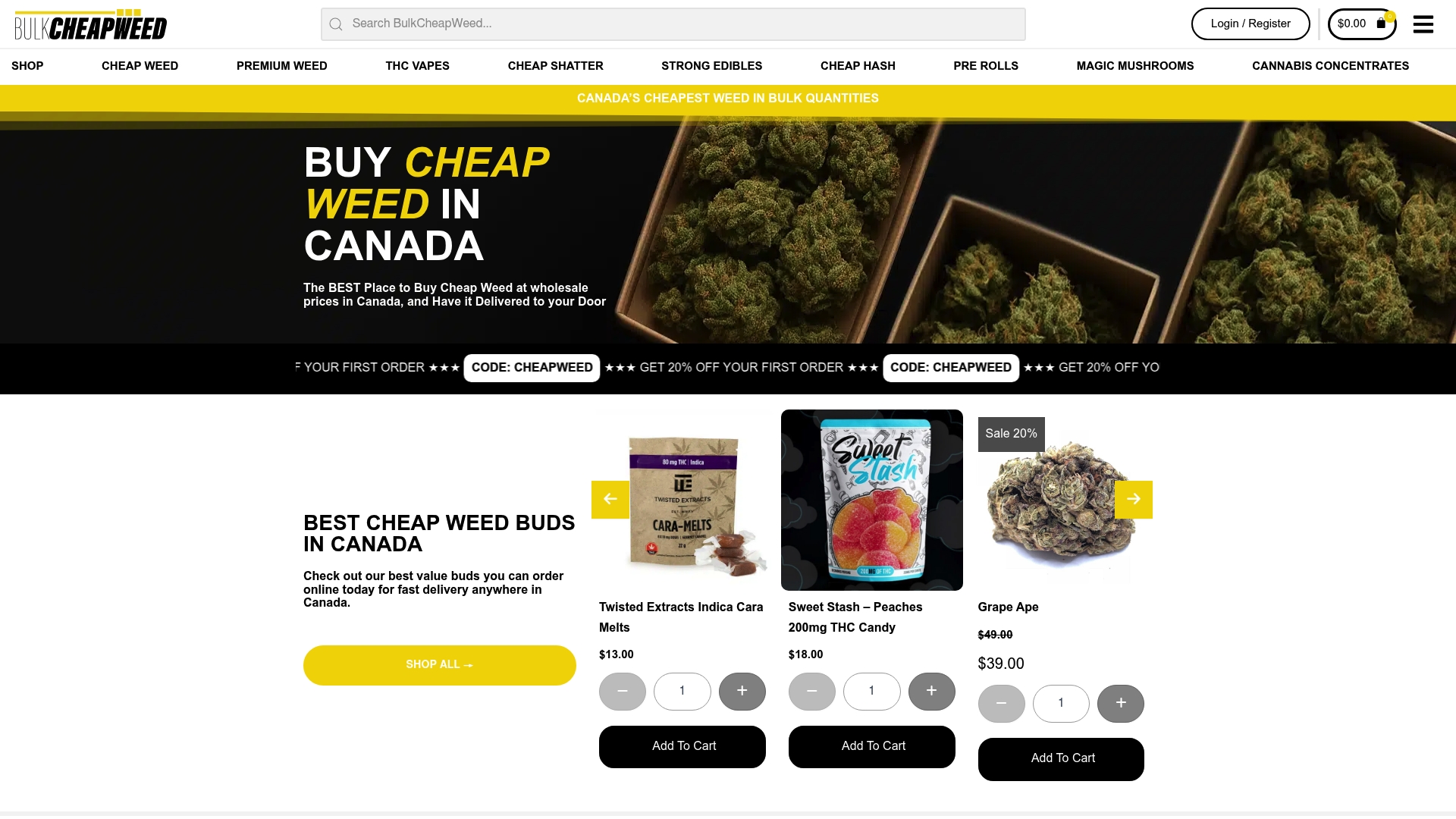
Bulk Cheap Weed’s bulk-pricing model means a mixed bundle often costs less per milligram than buying the same products one at a time, which is the whole point of shopping a variety pack in the first place. Our edibles category lets you filter by product type and build a bundle that matches your dosing profile instead of settling for whatever a pre-made pack includes.
A few things to check before you check out:
- Confirm “total THC per unit” on each product page before adding it to your bundle.
- Use a price-per-mg comparison across the items in your cart to make sure the bundle actually beats buying single units.
- Pick a shipping option that matches your order size, since larger bundles often clear free-shipping minimums.
If you want a starting point rather than building from scratch, our BC Weed edible choices page highlights a handful of picks worth adding to a first bundle.
Canadian resources on edibles and labelling
A few primary sources are worth bookmarking if you want to verify anything in this guide yourself.
- Health Canada’s packaging and labelling guide covers the per-unit THC rules behind every multipack.
- CCSA’s guidance on edible cannabis explains dosing and the “start low, go slow” principle for new users.
- For additional starting-dose guidance, Montrose Cannabis’s dosing resource outlines recommended starting doses in plain language.
This article is general information, not a substitute for advice from a qualified doctor. Consult a qualified healthcare professional about your own circumstances before acting on anything here.
Sources
- Packaging and labelling guide for cannabis products (Health Canada)
- 7 Things You Need to Know about Edible Cannabis (CCSA)
FAQ
What is the strongest edible you can buy in Canada?
Every immediate container of edible cannabis sold in Canada is capped at 10 mg of THC, so no single legal edible unit exceeds that limit. Co-packs can bundle multiple 10 mg units together, which raises the total THC in a package without breaking the per-unit rule. A roundup of the strongest legal edibles walks through options that sit at that ceiling.
Can you mix and match edibles?
Yes, many Canadian retailers let you combine different edible products into one order or one co-pack, as long as every immediate container still meets Health Canada’s packaging rules. Check the per-unit THC on each item and add up the total before you consume anything from the bundle.
Are edible gummies legal in Canada?
Edible gummies are legal to purchase from licensed Canadian retailers, provided they comply with Health Canada’s packaging and labelling rules, including the 10 mg THC per-unit limit. Buying from an unlicensed source removes that safety net entirely, since there is no guarantee the product was tested or labeled accurately.
Is a 10 mg edible better than a joint?
A 10 mg edible is not simply a “better” or “equivalent” version of a joint, the two produce different experiences because ingested THC converts in the liver into 11-hydroxy-THC, which tends to feel stronger and last longer than inhaled THC. Many adults are advised to start with 2.5 mg THC for edibles specifically because of that intensity difference, even if they have more experience smoking.