

No, psilocybin isn’t legal in Canada. Both psilocybin and psilocin sit on Schedule III of the Controlled Drugs and Substances Act, which makes possession, production, and sale illegal unless Health Canada specifically authorizes it. The only lawful doors in are a clinical trial, the Special Access Program, or a subsection 56 exemption. Everything else, including that storefront near you, operates outside the law.
TL;DR:
- Psilocybin remains illegal in Canada unless obtained through approved clinical trials, the Special Access Program, or Section 56 exemptions, all of which require licensed medical or research approval.
- The Controlled Drugs and Substances Act classifies psilocybin as a Schedule III substance, criminalizing possession, production, and sale without explicit legal authorization.
- Additional legal pathways, such as clinical trials and specific exemptions, are limited, slow, and require active involvement of licensed practitioners and Health Canada approval.
- Municipal storefront licenses do not legalize psilocybin sales, and operators face significant legal risks regardless of local permits or online advertising.
- Changes to regulatory frameworks are scheduled for October 2026, but until then, unauthorized possession or sales remain criminal offenses with serious penalties.
Table of Contents
- Psilocybin Legality in Canada: What the Law Actually Says
- What Are the Legal Ways to Access Psilocybin in Canada?
- What Regulatory Changes Are Coming to Psilocybin Access?
- Why Mushroom Storefronts and Online Sellers Aren’t Actually Legal
- How Do You Actually Request Legal Access to Psilocybin?
- Where Bulk Cheap Weed Fits Into the Psilocybin Conversation
- Sources
Psilocybin Legality in Canada: What the Law Actually Says
The Controlled Drugs and Substances Act (CDSA) is the federal statute governing psilocybin, and it hasn’t softened its stance heading into 2026. Psilocybin and psilocin are both listed under Schedule III, the same category that covers substances like LSD and MDMA. That classification carries real weight: it means the CDSA criminalizes possession, production, sale, and import or export of magic mushrooms across every province and territory, with no carve-out for personal or small-scale use.
The Food and Drugs Act compounds the problem for anyone hoping to buy psilocybin legitimately. Even if the CDSA weren’t in the picture, Health Canada confirms there are still no approved therapeutic psilocybin products on the market. Safety and efficacy haven’t been formally assessed for general use, which is precisely why the regulated pathways exist in the first place.
Penalties scale with the activity and quantity involved:
- Simple possession for personal use is typically prosecuted as a summary offense, though it still creates a criminal record.
- Trafficking or possession for the purpose of trafficking can be prosecuted as an indictable offense with far steeper consequences.
- Production (cultivating mushrooms or extracting psilocybin) carries penalties similar to trafficking, especially at commercial scale.
- Import or export across the Canadian border adds federal customs violations on top of CDSA charges.
Here’s the detail people miss: nothing in Canadian law distinguishes “medicinal intent” at the point of enforcement. A person growing mushrooms to self-treat depression faces the same statutory exposure as someone growing them to sell. Intent might matter to a judge during sentencing, but it doesn’t change what’s charged.
What Are the Legal Ways to Access Psilocybin in Canada?
Three routes exist, and only three. Health Canada is explicit that legal access runs through clinical trials, the Special Access Program, or a specific section 56 exemption granted by the federal Minister of Health. Nothing purchased from a storefront or website qualifies, no matter how professional the packaging looks.
- Clinical trials. Health Canada authorizes trials studying psilocybin for conditions like treatment-resistant depression and end-of-life distress. Participants get legal protection for the duration of the study, supply comes from a quality-controlled source, and researchers report adverse events as part of the trial’s oversight structure. Finding one usually means asking a psychiatrist or searching hospital-affiliated research networks directly.
- Special Access Program (SAP). This is practitioner-driven, not patient-driven. A physician submits a request to Health Canada on behalf of a patient with a serious or life-threatening condition when conventional treatments have failed. If approved, Health Canada issues a Letter of Authorization, which permits a licensed dealer to supply the practitioner with psilocybin for that specific patient.
- Subsection 56 exemptions. These are narrower, individualized exemptions the Minister of Health can grant outside the SAP framework, generally for specific practitioners or circumstances that don’t fit the standard SAP model.
A related mechanism, the subsection 56(1) class exemption, authorized practitioners, pharmacists, licensed dealers, and hospital staff to possess, transport, and provide psilocybin tied to an active SAP Letter of Authorization, without each of them needing an individual exemption.
Pro Tip: If you’re a patient exploring this route, start with your family physician or psychiatrist, not a psychedelic retreat or online seller. Only a licensed practitioner can initiate an SAP request, and skipping that step wastes time you don’t have.
What Regulatory Changes Are Coming to Psilocybin Access?
The framework Canadians rely on today didn’t exist a few years ago, and it’s already scheduled to change again. On January 5, 2022, Health Canada introduced the subsection 56(1) class exemption covering both psilocybin and MDMA, streamlining how SAP-linked activities got authorized for hospital staff and licensed dealers.
That exemption has a shelf life. Health Canada has confirmed it will be revoked when new Controlled Substances Regulations take effect on October 1, 2026. Practically, that means:
- Practitioners and pharmacists currently relying on the class exemption for SAP-related activities will need to operate under whatever framework replaces it.
- Licensed dealers handling psilocybin supply chains should expect updated compliance requirements tied to the new regulations.
- The Canada Gazette remains the definitive record for the exact regulatory text and any amendments published in the lead-up to the transition.
Political momentum has been building alongside the regulatory shifts. CBC News reported on a private member’s bill proposing to legalize certain psychedelics as part of a broader overhaul of Canada’s drug laws, and advocacy groups have publicly criticized how slow and inconsistent SAP approvals have been. None of that has changed the CDSA yet. Until Parliament amends the schedule itself, the underlying prohibition stands regardless of what bills get tabled.
Why Mushroom Storefronts and Online Sellers Aren’t Actually Legal
Walk down certain stretches of Vancouver, Toronto, or Montreal and you’ll find storefronts selling psilocybin products openly, some even displaying what looks like a municipal business licence. That licence means almost nothing under federal law. A city can license a retail space; it cannot override the CDSA, which is exclusively federal jurisdiction.
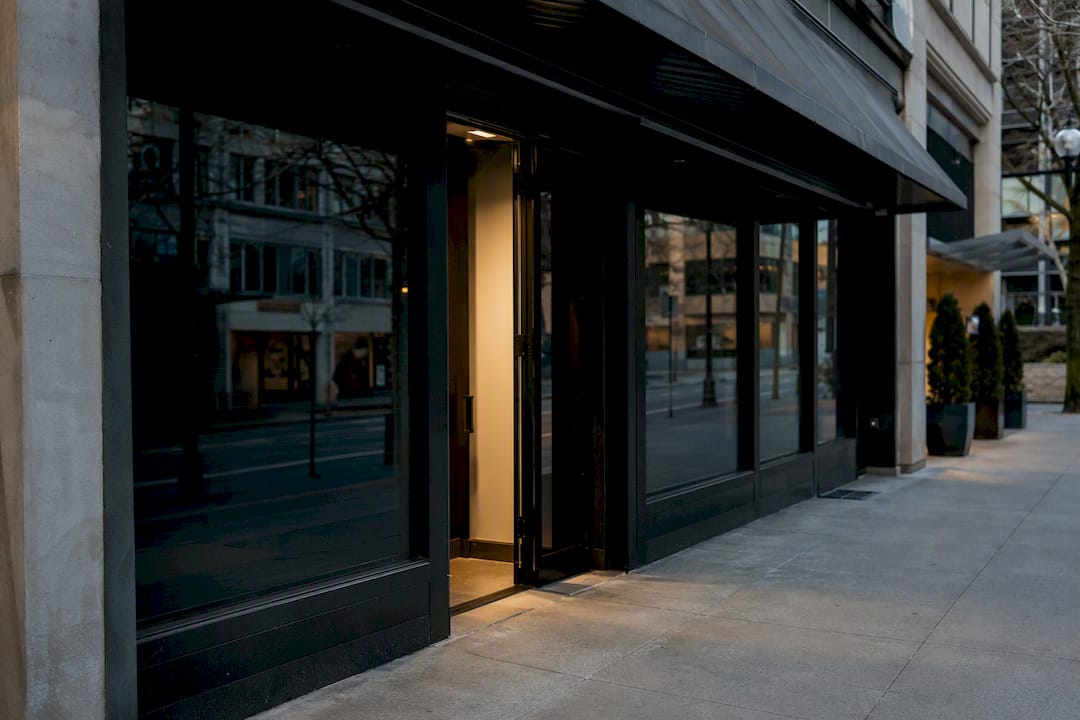
Legal analysts have made this point directly: municipal permits don’t legalize a controlled substance, and operators who assume otherwise have learned that the hard way through raids and closures. Enforcement isn’t constant or predictable. Some cities tolerate storefronts for stretches of time; others act quickly. That inconsistency creates a false sense of safety, but the underlying legal exposure never disappears, no matter how long a shop has been open without incident.
The risks run in both directions:
- Sellers face possession-for-trafficking or production charges, business asset seizure, and potential closure regardless of local licensing.
- Buyers face possession charges and have zero recourse if the product is mislabeled, contaminated, or dosed incorrectly, since nothing sold this way passes through quality control.
- Online sellers operating across provincial lines add potential import/export and mail-fraud exposure on top of standard CDSA charges.
Pro Tip: A municipal business licence displayed in a shop window tells you the city collected a fee. It tells you nothing about whether the products inside are legal to sell or safe to consume.
How Do You Actually Request Legal Access to Psilocybin?
If you’re a patient or a clinician trying to navigate this seriously, the process is slower and more paperwork heavy than most people expect, but it’s the only route that offers real legal protection.
For clinicians:
- Confirm the patient’s diagnosis meets the threshold Health Canada expects for SAP requests, typically a serious or life-threatening condition where standard treatments have failed.
- Identify a licensed dealer authorized to supply psilocybin under an active Letter of Authorization.
- Submit the SAP request directly to Health Canada with full clinical documentation supporting medical necessity.
- If considering a trial route instead, connect with a hospital-affiliated research team already running an authorized psilocybin study.
For patients:
- Raise the topic directly with your physician or psychiatrist. Nothing moves without a regulated practitioner initiating it.
- Ask specifically whether an active clinical trial is recruiting for your condition.
- Set realistic expectations around timing.
Pro Tip: Advocacy groups and legal aid clinics have reported that SAP requests can take months, and approval isn’t guaranteed even with strong documentation. If a request stalls or gets denied without clear reasoning, that’s the point to bring in a health lawyer or a patient advocacy organization rather than looking for a workaround.
Where Bulk Cheap Weed Fits Into the Psilocybin Conversation
Bulkcheapweed built its business on legal cannabis, not psychedelics, and that distinction matters here. What Bulkcheapweed does offer is educational content on mushrooms, including our beginner’s guide to magic mushrooms and a practical mushroom dosage chart for harm-reduction purposes. Reading either won’t grant you legal access. Only Health Canada authorization does that. If you’re shopping for something you can legally buy today, Bulkcheapweed’s cannabis shop carries flower, edibles, and concentrates at wholesale pricing across Canada.
— Supherbs
Sources
Skip the forums and Reddit threads. These four sources are where the actual rules live:
- An Act respecting the control of certain drugs, their precursors and other substances (Controlled Drugs and Substances Act) — Justice Laws Website
- Psilocybin and psilocin (Magic mushrooms) — Health Canada
- Conservatives pitch legalizing some psychedelics with bill to revamp Canada’s drug laws | CBC News
When the stakes involve a criminal record or a patient’s treatment plan, cross-check with Health Canada directly or talk to a lawyer. Guides like this one are a starting point, not a substitute for that conversation.